

Looking Ahead to 2010
 Now that we’re done rooting against both the Yankees and the Phillies, and the Yanks have held their stupid parade up the stupid Canyon of Heroes, we can officially begin looking ahead to 2010. Some will say that began at around the All-Star game last season, but we are optimists here. So let’s take a look at what the Mets need to do to get back to the post-season in 2010, or at least not be an embarassment again.
Citi Field
 Something must be done about Citi Field. All of the team’s problems in 2009 can’t be blamed on the new spacious ballpark, but it obviously had an effect on the team’s hitters. When your leading home run hitter has 12 homers, something is clearly very, very wrong.
The Mets hit just 49 home runs at Citi Field, actually more than the 46 they slugged on the road. But many players said they changed their entire approach to hitting because of Citi Field’s dimensions. Opponents hit 81 homers at Citi Field, showing that the ball can be hit out. But overall, Citi Field yielded the sixth fewest homers in baseball. Clearly, it is not a hitters ballpark.
Many say the fences should be moved in. An article in The New York Times has a better idea, advocating moving home plate up ten feet. This would give Citi Field similar distances to Shea Stadium, which was known as a fair field for hitters and pitchers alike. This would also increase foul territory behind home plate, which currently is the shortest in all of baseball. The article points out one more thing:
Moving home plate forward would also be far cheaper for the Mets than unleashing bulldozers on the outfield walls and rearranging any number of seats. The integrity of the stadium’s design would not be affected, and many fans might not notice much difference at all.
If the team decides not to change the field configuration, one thing they might want to consider is just lowering the outfield walls. Players seemed to complain more about the high walls than the distance to them. They range from 8 feet to 18 and a half feet high. If they were 8 feet high all around like at Shea, there would be plenty more home runs, as well as exciting Endy Chavez-type catches.
Having said all of this, I highly doubt any changes will be made to Citi Field. That would mean the Wilpons would have to admit they made a mistake. And we all know that never happens.
1st Base
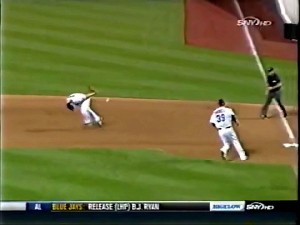 The Mets seem set on Daniel Murphy (left, making his incredible behind-the-back flip) at first. Hell, he was the team leader in homers in 2009 (see above). While I like Murphy and think he will develop into a good hitter despite a somewhat disappointing season, he is not the answer at first base — not for this team, not right now. Since it’s unknown whether David Wright will regain his home run swing, the Mets need power wherever they can get it. And first base is a good place.
The options are not great. There is talk the Brewers are thinking about dealing Prince Fielder. If that is the case, the Mets should trade anyone and everyone short of David Wright and Johan Santana to get him. But it’s extremely doubtful Fielder is going anywhere. Adrian Gonzalez might be on the trading block, but do the Mets have enough to get him? There’s always free agent Nick Johnson — an injury waiting to happen. Do the Mets need more injury-prone players? Carlos Delgado? No thanks. Murphy could not only end up being the best option, he could be the only option.
Catcher
Omir Santos was a nice story in 2009. He came out of nowhere to catch the majority of games, and provided a few highlights in an otherwise dismal year. But is he starting catching caliber? The Mets apparently don’t think so, as they are reportedly targeting several free agent catchers, including Rod Barajas, Bengie Molina, and even Yorvit Torrealba. Of course, Torrealba is the same guy to whom the Mets made an offer a couple of years ago, only to pull it at the last second. He still has a grievance pending against the team, so it’s unlikely he’ll be on the Mets next season.
Left Field
This is the one place where a major upgrade is possible. Matt Holliday and Jason Bay are out there for the taking — all the Mets have to do is open the vault and let them in. But why would a power hitter want to sign with the Mets and play in Citi Field, where home run balls go to die? If they can’t nab one of the big free agents — and it says here they won’t — they could always try to trade for Adam Dunn, whom they should have signed last year. He’s proven he can hit the ball out of Citi Field. Sure, he strikes out a lot, but he also walks enough that his OBP is over .400. Carl Crawford is another trade option, but he’s not a power hitter. If they can swing a deal for a power hitter at first, then maybe Crawford would make sense. Fan favorite Xavier Nady is a free agent, but he’s coming off a second Tommy John surgery. And, can he play left? The same question goes for Jermaine Dye.
Starting Pitching
 The starting pitching is a mess. Right now they have Johan Santana and four question marks. Santana himself is no sure thing because he’s coming off surgery, but he should be okay. John Lackey (left, who certainly won’t get number 41 if he signs with the Mets) would be the perfect addition, but he will command big bucks, and it’s not not clear how much the Mets would want to spend. I think there is a chance the bidding will not get as high as expected, because the Yankees and Red Sox will likely sit this one out, and with those two teams out of the bidding, the price may stay reasonable. Remember Frankie Rodriguez?
Roy Halladay or Roy Oswalt (or anyone else named Roy) would be great as well. Both could be dealt, especially Halladay. But the Mets probably don’t have the prospects to nab either one. Then again, they didn’t have enough to get Santana, and somehow he ended up in a Mets uniform.
Then there are the likes of Jon Garland and Randy Wolf, either of whom the Mets should have signed last year. Both are solid, middle-of-the-rotation guys. The free agent list is packed with guys like these.
Here’s what I say should happen — the Mets should bring in two new starters, preferably one of those front-line guys and a second-tier pitcher, or a Plan B of two of the second-tier free agents. Then, have an open competition in spring training for the final two spots between Mike Pelfrey, Oliver Perez, John Maine, Jon Niese, Bobby Parnell (who should remain in the bullpen), Fernando Nieve, Pat Misch and whoever else is around. And if Perez doesn’t make it, just admit your mistake, cut him a $24 million dollar check and wave goodbye.
But here’s what I think will unfortunately happen — the Mets will miss out on the aces, sign only one of the second-tier guys, give rotation spots to Pelfrey and Perez, and have a competition for the fifth spot. Which means the Mets will have basically the same rotation as 2009. And that is a recipe for disaster.
Manager
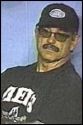 Jerry Manuel will start 2010 at the helm of the Mets, but the shadow of Bobby Valentine will be lurking. If the Mets get off to a slow start, the fans will start clamoring for Valentine (left, with his famous fake moustache). It’s actually pretty incredible that a potential manager could fire up a fan base, but Valentine has that allure. He was perhaps the best manager the Mets have ever had — definitely the best since Davey Johnson — and the majority of Mets fans simply love the man. The same reportedly cannot be said about management. Valentine has the kind of abrasive personality that wears thin after a while, and from all accounts , the Wilpons are all worn out. But if 2010 picks up where 2009 ended, and the Mets are desperate to keep their fans happy, rehiring Valentine will do the trick.
Bottom Line
The prognosis does not look good, I’m afraid. The Mets don’t have the prospects to deal for a major talent. They could, of course, follow the example of their crosstown rivals and just buy the best players available. But knowing the Mets history, that is not something they will do.
Maybe Omar Minaya will surprise us, and pull off a Santana-type swindle, or make a shrewd K-Rod-type free agent signing. All we can do is hope. If you’re a lifelong Mets fan, you’re used to it.
Can Wally Backman get a AMEN? Might even take him first over Bobby V, maybe
What i dont get is why Mets fans have an infatuation with a manager who 6-7yrs ago..THEY RAN OUT OF THE CITY. If we rewind the clock to the any season he managed you’ll see fans said the same thing about him then that they are saying about Jerry now.
Mets fans simply didnt like the man, players supposedly didnt like the man. I do not want to see him back. Right now fans want to piint the finger at Jerry and Omar for everything. Its not their fault this team suffered a massive amount of injuries. They have been playing sloppy ball since ’07. There hasn’t been a GM here that fans were proud of, nore has their been a manager that fans didnt complain about while he managed.
I love the Mets but the big problem is..for years this team tries to sell us the idea that this will work and most fans see it as nonsense.
After the ’07 season they said the SP was fine, they didnt upgrade..what happened Glavine, Pedro, El Duque and Maine broke down. Which lead to us getting Santana but the bullpen was also an issue. They ignored it and downplayed it in both ’07 and ’08.. then after the ’08 season they realized it is..then got Putz and K-Rod.. but there was a gapping hole at LF..they had options and said ..our offense was fine. We all know this team was horrible at bringing runners in and playing station to station baseball.
My point is they fix these problems a year late and fail to identify current problems. I dont put blame on omar, but the Wilpons because it was obvious they just couldnt spend money last year..which falls on the owners. There have been so many sure fire free agents this team shouldve and couldve signed but just passed..from a-rod to Vlad and now probably holliday and lackey
My 2010 mets wish list looks like this :
c: Molina
1b: Gonzalez , or delgado
2b Hudson , or Phillips
ss: Reyes
3b: wright
lf : bay
cf: beltran
rf: holliday
sp: santana,lackey or Halliday but both would be nice , Maine, pelfry
The dimensions are not a problem. In fact only 12 hits that would have been HR’s at Shea were robbed by Citi Field and Citi yielded 2 HR’s that would have been outs at Shea. A net difference of 10 HR’s over the course of the year. The real HR problem boiled down to Mets offense, not the field:
Wright dropped off by 15-20 HR’s, part of this had to do with him changing his swing style, another part had to do with lack of protection. Look for wright to double his number next season (+10 HR’s)
Jose Reyes missed pretty much the entire season. We know he has the pop to hit 10-15 HR’s, and with the angles and dimensions at Citi, look for him to turn triples into HR’s (I would say 3-5) and doubles into triples. Look for a career year in slugging numbers… as long as his legs are healthy (+18 HR’s, running total +28HR’s)
First Base, Carlos Delgao is good for 30 HR’s a year, so we lost 25 with him going out. Murphy hit 12 and led the team. He has another year under his belt and has shown the ability to adapt to pitcher adjustments. Give him some protection in the lineup and 20 HR’s does not seem unreasonable (+10, running total +38 HR’s)
Carlos Beltran: Injured and hit 10 HR’s, he is good for 25 to 30. given a full season expect that production once again. (+15, running total +53 HR’s)
So there is your power struggle fixed with just the players you have.
Now add Matt Holliday and give him 20 HR’s (give him a year to adapt to NY) and that is 5-7 more than we received from the position last year. And Holliday adds much needed protection for the rest of the lineup.
That is 60 HR’s that could be added by signing one player and have the rest healthy.
BTW, Jon Heyman states that the Mets farm system DOES have the chips necessary to deal for one of the elite players out there. (Halladay or Adrian Gonzalez)
Hallady is the better option since we can leverage the ability to renegotiate his contract to pay him what he wants.
Again, another analysis of the Mets with no mention of Angel Pagan. I was a big enough loser that I actually watched the 2nd half of the year and AP was a 2nd half Allstar. To give Murph and French a roster spot over Angel is crazy. Nothing but doubles and triples for the entire second half should earn you some respect.
HOW WOULD A LINEUP OF REYES,HUDSON,BELTRAN,WRIGHT,MOLINA,NICK JOHNSON,FRENCHY,& CAMRON SOUND.WITH THE EXTRA MONEY WE CAN GET LACKEY. YOU ADD DEFENCE, SPEED & HEART TO THE TEAM. SOMTHING IT LACKED IN 09′
The way for success of the mets is simple spend spend spend!!!!!!! Get John Lacky Matt hoiladay trade for Adam Dunn trade Luis castillo for cheap minor league crape with the dodgers and sigh sigh sigh !!!!!!! Orlando Hudson!!! Then get rid of Olly perez and keep gim in Single A to be an Ace and trade 3 Top prospects for Roy Halladay then Keep John Maine in the Rotation and trade away Big pelf and Sigh Randy wolf that would make the best mets team ever!!!!
I really think the Mets should trade for brandon phillips to play 2b,Then sign jason bay to play LF. At catcher why not sign migel olivio. As for pitching I think they should sign randy wolf and joel piniero then go after mike gonzalez to beef up there bullpen like in 2006. Why not go after nick lowry who just might be a sleeper # 5 starter. Remember he is 25yrs old and won 14 games 2 years ago.
I was just checking the non-tender guys and there were a couple of names that jumped out at me. First, I know it might feel weird to do it, but what about a Mike Jacobs, the guy was so young when he was a Met, and he would be a solid number 4 hitter in between beltran and wright. Looking over the list, the other name that really jumped out was Chien-Ming Wang. Again, I know the front office would get killed by the pro-yankee media in NY, but still the guy was a stud for two years. I’d rather take a shot on a pitcher who has proven to have ace stuff in the Bronx than Pelfrey who seems to have more psychological issues than most characters on Reality TV. Just a couple of ideas that I feel would solidify for the long term, rather than a move for Halladay which would cost whatever is left of our farms.
My 2010 Mets team would look like this:
SS Jose reyes
2B Brandon Phillips
CF Carlos Beltran
3B David Wright
LF Jason Bay
RF Jeff Francoeur
1B Daniel Murphy
C Migel Olivio
SP- J Santana,J Piniero,R. Wolf, M. Pelfey, N. Lowry
RP- M. Gonzalez(from Atlanta),Justin Duchscherer(from Oakland),B. Parnell, J. Feliciano,B Stokes,
CL K-ROD
My 2010 Mets team would look like this:
SS Jose reyes
2B Brandon Phillips
CF Carlos Beltran
3B David Wright
LF Jason Bay
RF Jeff Francoeur
1B Daniel Murphy
C Migel Olivio
SP- J Santana,J Piniero,R. Wolf, M. Pelfey, N. Lowry
RP- M. Gonzalez(from Atlanta),Justin Duchscherer(from Oakland),B. Parnell, J. Feliciano,B Stokes,
CL K-ROD
*Please Omar get a strong bullpen and B. Phillips to play 2B
If we trade for B. Phillips which he will make 6.75 mil in 2010 that would only be $750,000 more than castillo plus Phillips hits 15-25hrs and can get you 80-100 rbi’s and 20-30 sb’s. Then we can save money by signing J. Bay. He wants less yrs and less money than M. Holliday which can save us for starting pitching and a stronger bullpen. R. Halladay may be a great pitcher but I feel he is not worth all our draft picks. We must learn from past mistakes. If Omar can make a deal like he did with Santana then great otherwise lets go for 2nd tier sp’s and strenthen our bullpen. I would go after J. Pinero and R. Wolf. I would even try and grab Noah Lowry from san fran and give him a shot at the #5 slot. Remember he won 14 games in 2008 and he is only 25 yrs. old. As for the bullpen why not go after M. Gonzalez from Atlanta and J. Duchscherer from Oakland. They both performed well in 2009 and would definitely strengthen our bullpen for 2010.
Correction on Noah Lowry. He is going to be 30 in 2010 not the 25 I mentioned and he won 14 games in 2007 not 2008. Sorry for that mistake. I still think he can win 12-15 games and come real cheap.
My 2010 Mets team would look like this:
SS Jose reyes
2B Brandon Phillips
CF Carlos Beltran
3B David Wright
LF Jason Bay
RF Jeff Francoeur
1B Daniel Murphy
C Miguel Olivo
SP- J Santana,J Piniero,R. Wolf, M. Pelfey, N. Lowry or J. Maine
RP- M. Gonzalez(from Atlanta),Justin Duchscherer(from Oakland),B. Parnell, J. Feliciano,B Stokes.
CL K-ROD
*Please Omar get a strong bullpen and B. Phillips to play 2B
Teams win championships with great pitching and great bullpens. Just look at the Yankees SP’s and bullpen and you know why they won the World Series.
All the Mets need is to get 15-25 home run hitters and a good pitching staff with an excellent bullpen and I guarrantee they will get to the World Series. You don’t need 8 AROD’S on your team just a well balanced offense and great pitching and a great bullpen.
My 2010 Mets team would look like this:
SS Jose reyes
2B Brandon Phillips
CF Carlos Beltran
3B David Wright
LF Jason Bay
RF Jeff Francoeur
1B Daniel Murphy
C Miguel Olivo
SP- J Santana,J Piniero,R. Wolf, M. Pelfey, N. Lowry or J. Maine
RP- M. Gonzalez(from Atlanta),Justin Duchscherer(from Oakland),B. Parnell, J. Feliciano,B Stokes.
CL K-ROD
*Please Omar get a strong bullpen and B. Phillips to play 2B
I truly believe that this lineup and pitching staff can and would dethrone the Phillies and shut J. Rollins up.
Dude, are you ignorant or something? You’re acting like the Met’s don’t have the cauffers the Yankees do. The Yankees ranked first in payroll this year and the Met’s placed 2nd. The Met’s deffinately have the resources to match the Yankees payroll this year and next. Perhaps the key for the Met’s would be to stop acting like they’re playing in the shadow of a giant twice their size and start adapting the same strategy as the Yankees, being don’t trade all of your farm system for an ace that you have to pay free agent money to anyway and don’t sign player’s that are replacement level players at best for premium salaries, cough Luis Castillo, You act like Johan was such a great acquisition and then you wonder why when you have injuries you have no player’s to fill voids. The Met’s are an embarrassment to NY and baseball, and they have been for years.
can someone tell me how Castillo with his near .400OBP and servicable defense is the problem.
Hey Barry money doesn’t buy championships. I guess you forgot the 2003 season when the Marlins beat your so called Yankees. Then in 2004 Those same Yankees blew a 3-0 league championship series to the Red Sox. I think that more of an embarassment then the Mets.
Moises Alou is coming off the DL.